

How does PVC cling film adhere to itself?
Dec 23, 2025
Hey there! As a supplier of PVC cling film, I've been getting a lot of questions lately about how this nifty stuff manages to stick to itself. It's a pretty cool phenomenon, and I'm here to break it down for you in a way that's easy to understand.
First off, let's talk about what PVC cling film is. PVC, or polyvinyl chloride, is a type of plastic that's commonly used in a wide range of products, from pipes to clothing. When it comes to cling film, PVC is made into a thin, flexible sheet that can be wrapped around food, containers, and other items. The film is known for its ability to adhere to itself and to other surfaces, which makes it a popular choice for keeping food fresh and protecting items during storage or transportation.
So, how does it actually stick to itself? Well, there are a few different factors at play. One of the main reasons PVC cling film adheres to itself is due to a phenomenon called van der Waals forces. These are weak intermolecular forces that occur between molecules. When two surfaces come into close contact, the van der Waals forces between the molecules on the surfaces can cause them to stick together. In the case of PVC cling film, the molecules on the surface of the film are attracted to each other, which creates a weak bond that holds the film together.
Another factor that contributes to the clinginess of PVC film is static electricity. When you unroll the cling film, the friction between the film and the dispenser or your hands can generate static electricity. This static charge causes the film to stick to itself and to other surfaces. You may have noticed that the film seems to cling more tightly when it's cold or dry, which is because static electricity is more likely to build up in these conditions.
The surface properties of the PVC cling film also play a role in its adhesion. The film is typically treated with a special coating that helps to enhance its clinginess. This coating can increase the surface energy of the film, making it more likely to stick to itself and other surfaces. Additionally, the smoothness of the film's surface can also affect its adhesion. A smoother surface allows for more intimate contact between the molecules on the film, which can strengthen the van der Waals forces and improve the cling.
Now, let's take a closer look at the manufacturing process of PVC cling film and how it affects its adhesion properties. During the production of PVC cling film, the plastic is melted and then extruded through a die to form a thin sheet. The sheet is then stretched in both the machine direction and the transverse direction to orient the polymer molecules. This orientation can improve the mechanical properties of the film, such as its strength and flexibility, and it can also enhance its clinginess.
After the stretching process, the film is cooled and then wound onto a roll. During this winding process, the film is often subjected to a corona treatment. Corona treatment is a process that uses a high-voltage electrical discharge to modify the surface properties of the film. This treatment can increase the surface energy of the film, making it more receptive to the coating that is applied later to enhance its cling.

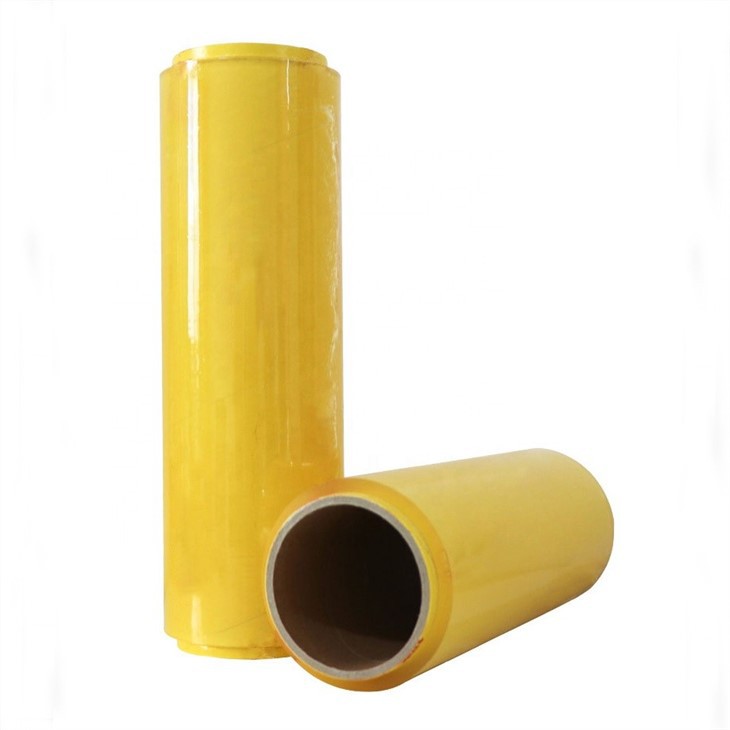
Once the film has been treated, it is coated with a thin layer of a cling additive. This additive is typically a type of polymer or a surfactant that helps to reduce the surface tension of the film and increase its adhesion. The cling additive is carefully formulated to provide the right balance of clinginess and ease of use. Too much cling can make the film difficult to handle, while too little cling can result in the film not sticking properly.
As a PVC cling film supplier, I understand the importance of providing a high-quality product that meets the needs of our customers. That's why we pay close attention to every step of the manufacturing process, from the selection of the raw materials to the application of the cling additive. We use only the highest quality PVC resin and additives to ensure that our films have excellent adhesion properties, as well as good clarity, strength, and flexibility.
We offer a wide range of PVC cling film products to suit different applications. For example, our PVC Cling Film Jumbo Roll is ideal for commercial food service operations, such as restaurants, bakeries, and catering companies. These jumbo rolls are large in size and can be used to wrap large quantities of food quickly and efficiently.
Our PVC Vegetable Film is specifically designed for wrapping fresh produce. This film has excellent breathability, which helps to keep vegetables fresh for longer by allowing them to breathe and preventing the buildup of moisture. It also has good cling properties, which ensures that the film stays in place and provides a tight seal around the vegetables.
In addition, we also have PVC Film Wraps that are suitable for a variety of other applications, such as wrapping gifts, protecting furniture, and covering household items. These wraps are available in different sizes and thicknesses to meet the specific needs of our customers.
If you're in the market for high-quality PVC cling film, I encourage you to get in touch with us. Whether you're a small business owner looking for a reliable supplier of food wrapping film or a large corporation in need of custom-made PVC film products, we have the expertise and the resources to meet your requirements. Our team of experts is always ready to assist you in finding the right product for your needs and providing you with excellent customer service.
In conclusion, the ability of PVC cling film to adhere to itself is a result of a combination of factors, including van der Waals forces, static electricity, surface properties, and the manufacturing process. As a PVC cling film supplier, we are committed to producing high-quality products that offer excellent adhesion, clarity, and strength. If you have any questions or would like to discuss your PVC cling film requirements, please don't hesitate to contact us. We look forward to working with you!
References
- "Polyvinyl Chloride (PVC) - Properties, Applications, and Processing" by John A. Brydson
- "Plastics Technology Handbook" by James F. Carley
- "Surface and Colloid Chemistry in Advanced Technologies" by Andrzej Nowicki