

What is the sound insulation performance of PVC plastic film?
Oct 31, 2025
What is the sound insulation performance of PVC plastic film?
As a supplier of PVC plastic film, I often get inquiries about the various properties of our products, and one question that has been coming up more frequently lately is about the sound insulation performance of PVC plastic film. In this blog post, I'll delve into this topic in detail, exploring what factors affect the sound insulation of PVC plastic film, its real - world applications, and how it stacks up against other materials.
How does PVC plastic film insulate sound?
Sound insulation, also known as soundproofing, is the process of reducing the amount of sound that passes through a material. To understand how PVC plastic film insulates sound, we need to look at the basic principles of sound transmission. Sound travels in waves through a medium, such as air. When these waves encounter a material, they can be reflected, absorbed, or transmitted through the material.
PVC plastic film can contribute to sound insulation mainly through absorption and reflection. The molecular structure of PVC allows it to absorb some of the sound energy. When sound waves hit the PVC film, the molecules in the film start to vibrate. This vibration converts some of the sound energy into heat energy, thus reducing the amount of sound that passes through. Additionally, the surface of the PVC film can reflect a portion of the sound waves back, further reducing the sound transmission.
Factors affecting the sound insulation performance of PVC plastic film
- Thickness: One of the most significant factors is the thickness of the PVC plastic film. Generally, thicker films have better sound insulation properties. A thicker film has more material to absorb and reflect sound waves. For example, a 0.5 - mm thick PVC film will have better sound - blocking capabilities compared to a 0.1 - mm thick one.
- Density: The density of the PVC plastic film also plays a role. Higher - density PVC films are more effective at insulating sound. A denser material has more molecules per unit volume, which means there are more opportunities for sound waves to interact with the material, leading to greater absorption and reflection.
- Additives: The additives used in the production of PVC plastic film can influence its sound insulation performance. Some additives can enhance the film's ability to absorb sound. For instance, certain types of fillers can increase the internal friction of the film, which helps in converting sound energy into heat.
Real - world applications of PVC plastic film for sound insulation
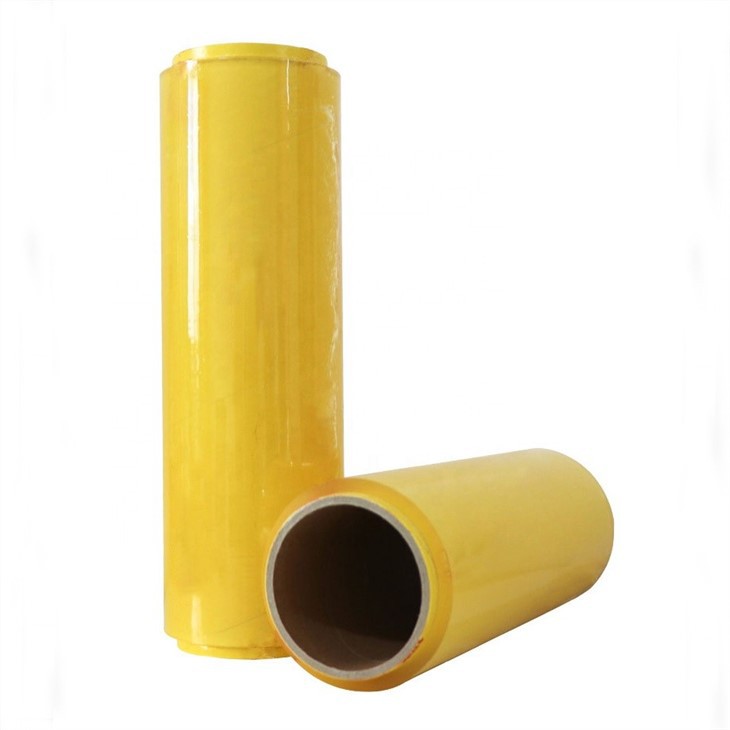
- Home use: PVC plastic film can be used in homes for various sound - insulating purposes. For example, it can be applied to windows to reduce the amount of outside noise, such as traffic or construction noise. You can find our PVC Cling Film Jumbo Roll very useful for this application. It can be easily cut and applied to the window frames, providing an additional layer of sound insulation.
- Industrial settings: In industrial environments, where noise can be a significant problem, PVC plastic film can be used to create partitions or enclosures. These partitions can help in containing noise within a specific area, protecting workers from excessive noise exposure. Our PVC Plastic Wrap can be used to cover machinery or create makeshift sound - proof barriers.
- Automotive industry: In cars, PVC plastic film can be used in the interior to reduce road and engine noise. It can be applied to the doors, floors, and ceilings of vehicles to improve the overall acoustic comfort for passengers. Our PVC Film Wraps can be customized to fit different automotive parts, providing an effective sound - insulation solution.
Comparison with other sound - insulating materials
When compared to other common sound - insulating materials like fiberglass or acoustic foam, PVC plastic film has its own advantages and disadvantages.
- Advantages:
- Flexibility: PVC plastic film is highly flexible, which makes it easy to install in various shapes and sizes. It can be easily cut, bent, and wrapped around objects, making it suitable for a wide range of applications.
- Cost - effective: In general, PVC plastic film is more cost - effective than some other sound - insulating materials. This makes it an attractive option for budget - conscious consumers and businesses.
- Disadvantages:
- Limited sound - blocking capacity: Compared to thicker and more specialized sound - insulating materials, PVC plastic film may have a limited ability to block very high - intensity sounds. For example, in a very noisy industrial environment, it may not provide as much sound insulation as a thick fiberglass panel.
- Durability: In some harsh environments, PVC plastic film may not be as durable as other materials. It can be prone to damage from sharp objects or extreme temperatures, which may affect its long - term sound - insulation performance.
Our PVC plastic film offerings for sound insulation
As a PVC plastic film supplier, we offer a wide range of products with different thicknesses, densities, and properties to meet various sound - insulation needs. Our R & D team is constantly working on improving the sound - insulation performance of our products by optimizing the production process and using the latest additives.
We understand that every customer's requirements are unique. Whether you need a thin film for a small home project or a thick, high - density film for an industrial application, we can provide you with the right solution. Our products are manufactured to the highest quality standards, ensuring reliable and consistent sound - insulation performance.

Contact us for procurement and discussion
If you are interested in our PVC plastic film for sound - insulation purposes, we encourage you to contact us. We have a team of experts who can provide you with detailed information about our products, help you choose the right film for your specific needs, and offer competitive pricing. Whether you are a homeowner looking to reduce noise in your living space or an industrial manufacturer in need of sound - proofing solutions, we are here to assist you. Let's work together to find the best PVC plastic film solution for your sound - insulation requirements.
References
- "Plastics in Building and Construction" - A comprehensive guide on the properties and applications of plastics in the construction industry, which includes information on the sound - insulation properties of PVC.
- "Polyvinyl Chloride (PVC) Technology" - This book provides in - depth knowledge about the production, properties, and applications of PVC, including factors affecting its sound - insulation performance.
- Industry research reports on the use of PVC plastic film in different sectors, which contain data on the effectiveness of PVC film for sound insulation in real - world scenarios.